LG OLED TV Brand Review: B5 vs C5 vs G5
LG's OLED range covers value-focused, balanced, and flagship buyers through the B5, C5, and G5. This brand review explains what stays consistent, what improves as you move up, and which model makes the most sense for different rooms and budgets.
Our Verdict
One overall score, with the important jobs separated below. Scores reflect the evidence and limitations stated in this review.
What it is and where it fits
LG's OLED television family spans a value-focused B5, balanced C5, and flagship G5. Core OLED contrast, Dolby formats, webOS, and gaming support run across the range, while processing, brightness positioning, refresh-rate ceiling, design, and warranty distinguish the tiers.
- Self-lit OLED pixels across the B5, C5, and G5 families
- 120Hz, 144Hz, and 165Hz model progression
- Dolby Vision, Dolby Atmos, and Filmmaker Mode support
- webOS with LG Re:New platform-upgrade program
- Multiple screen sizes covering desktop, living-room, and theater use
Reasons to buy
- Excellent black-level potential across the OLED lineup
- Strong console and PC gaming compatibility
- Clear product ladder for different budgets
- Broad size selection and mature smart platform
- G5 adds a longer limited panel-warranty structure
Reasons to compare
- Promotional pricing can make the lineup confusing
- Reflections and room brightness still affect the result
- OLED is not the lowest-risk choice for extreme static content
- Built-in sound does not replace dedicated audio
- G5 tabletop buyers may need to confirm stand arrangements
Products reviewed in this guide
LG OLED B5 65-inch (OLED65B5PUA)
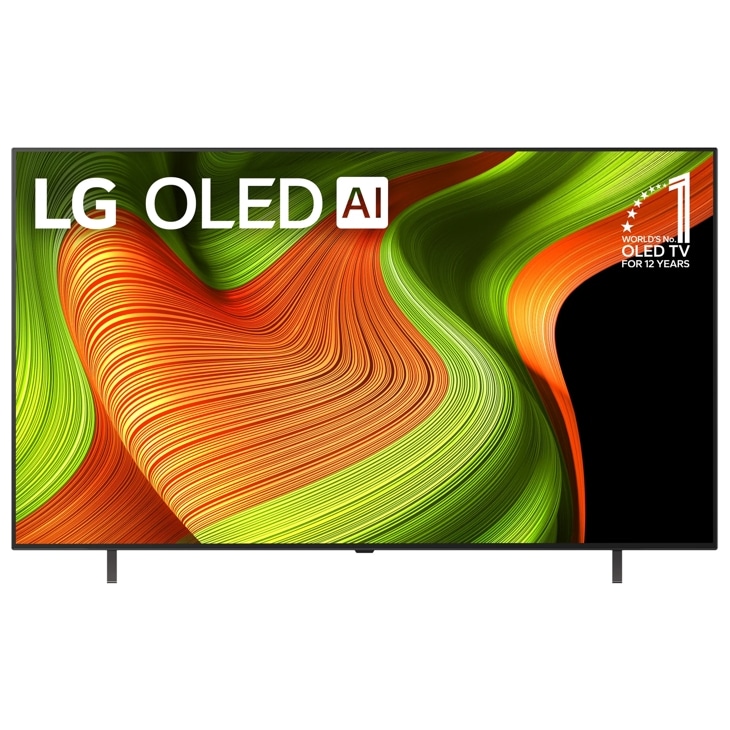
The B5 is the sensible entry point when it is meaningfully cheaper than the C5. Its self-lit OLED panel, Dolby Vision support, 120Hz refresh rate, G-SYNC, FreeSync Premium, and VRR cover the priorities of movie viewers and current-console gamers. The compromise is relative: the C5 and G5 add stronger processing, brighter positioning, and higher PC refresh ceilings. In a controlled-light room with a console, those upgrades may not justify a large price gap. In a bright living room or when B5 and C5 sale prices converge, compare the C5 before choosing.
LG OLED evo C5 65-inch (OLED65C5PUA)
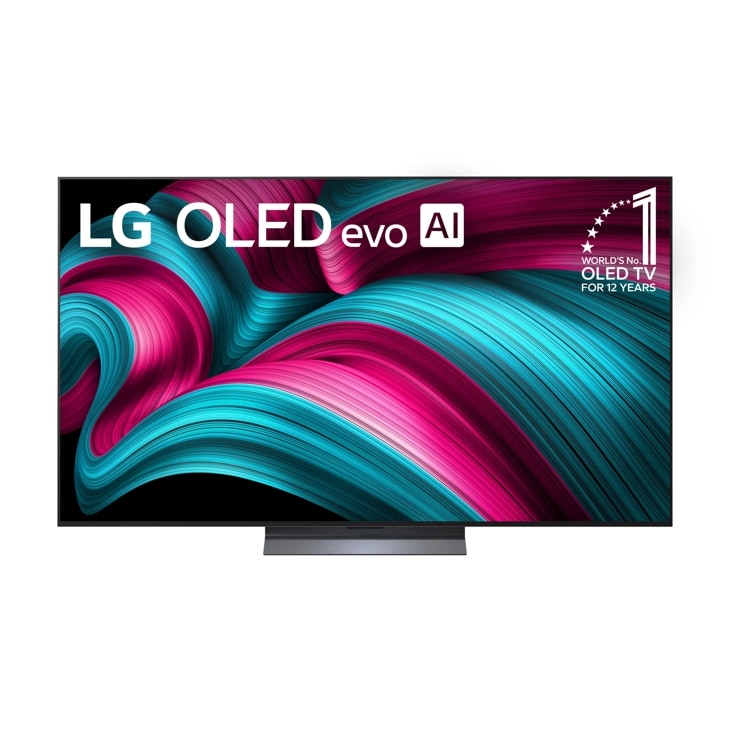
The C5 is the default recommendation in this lineup because its upgrades apply to a broad mix of uses. It keeps OLED's movie-friendly black control, adds Brightness Booster positioning, moves to the Alpha 9 AI Processor Gen8, and supports up to 144Hz for a compatible PC while remaining fully suited to current consoles. It is not automatically the best daylight TV, and buyers in highly reflective rooms should compare a high-brightness mini-LED model. Within LG's range, however, it usually offers the cleanest balance of picture capability, gaming flexibility, size choice, and price.
LG OLED evo G5 65-inch (OLED65G5WUA)
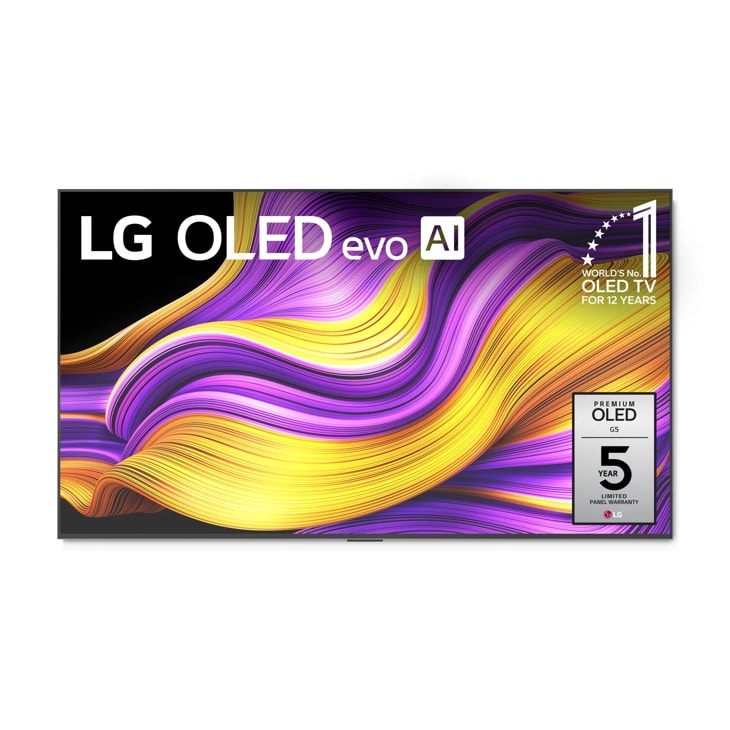
The G5 is the model to consider when the room, installation, or gaming system can use its specialist strengths. LG pairs its Alpha 11 AI Processor Gen2 with Brightness Booster Ultimate and supports refresh rates up to 165Hz. The gallery-oriented 65-inch model is supplied with a wall mount, so tabletop buyers should confirm the stand arrangement before ordering. Its five-year limited panel warranty adds confidence, but years two through five are panel coverage rather than a promise of completely free repair labor. The G5 is the most capable choice here, though the C5 remains the better value for many ordinary rooms.
Scope of this LG OLED brand review
This review looks at LG's 2025 US OLED television family through three representative 65-inch models: the value-oriented B5, the balanced C5, and the flagship G5. It is a review of the product family and ownership proposition rather than a claim that every television sold under the LG name performs the same way.
Our assessment uses LG's current product pages, published specifications, warranty language, support resources, and listed pricing. We have not placed all three televisions on a laboratory bench, so the scores describe evidence-backed use-case fit rather than unpublished brightness, color, input-lag, or response-time measurements. Exact performance can vary with screen size, firmware, panel sample, picture mode, source quality, and region.
The short version
LG remains one of the easiest OLED brands to shortlist because its lineup has a clear internal ladder. The B5 preserves the core OLED experience and modern gaming compatibility at the entry point. The C5 adds processing headroom, a brighter positioning, and a higher refresh ceiling without moving fully into flagship pricing. The G5 is the specialist option for buyers who want LG's brightest 2025 OLED design, its most advanced processor, faster PC gaming support, and the longer limited panel-warranty structure.
The C5 is the safest starting point for most buyers. The B5 becomes compelling when it is meaningfully cheaper and 120Hz is enough. The G5 earns its premium most clearly in a brighter room, a wall-mounted installation, or a high-end gaming setup where its extra capabilities will actually be used.
What LG does consistently well
OLED contrast and wide-seat consistency
Every model in this comparison uses self-lit OLED pixels. Pixel-level light control allows a dark pixel to switch off instead of depending on a shared backlight, which supports deep blacks and precise local contrast. That makes the range naturally strong for films in a dim room and helps letterbox bars remain dark.
OLED also tends to maintain a more consistent image away from the center than many LCD televisions. That is useful in a wide living room, for sports nights, and for households where not everyone sits directly in front of the screen. It does not solve reflections or guarantee sufficient brightness for every sunlit space, which is why room conditions still matter when choosing between B5, C5, and G5.
A mature gaming feature set
LG treats gaming as a core part of the OLED range rather than a feature reserved for one expensive model. The B5 supports up to 120Hz and lists NVIDIA G-SYNC, AMD FreeSync Premium, and variable refresh rate. The C5 raises the refresh ceiling to 144Hz, while the G5 reaches 165Hz on compatible inputs. Current consoles do not require the G5's full ceiling, but a suitable gaming PC can use it.
Refresh rate alone does not determine responsiveness. Game mode, source format, frame rate, firmware, and signal configuration all contribute. Still, the lineup gives buyers a sensible progression: the B5 covers current console priorities, the C5 suits consoles plus higher-refresh PC use, and the G5 targets enthusiasts who want maximum specification headroom.
Dolby formats and filmmaker-oriented modes
The three models support Dolby Vision, Dolby Atmos, and Filmmaker Mode. Dolby Vision is useful for compatible films and streaming services, while Filmmaker Mode offers a restrained starting point for viewers who want less aggressive motion and picture processing. A format badge is not a guarantee of a perfectly calibrated picture, but broad format support makes the TVs flexible across common premium sources.
webOS and the Re:New program
webOS combines streaming apps, inputs, recommendations, and connected-home controls. LG's Re:New program improves the software story by promising multiple platform upgrades for eligible televisions. That is valuable for a product expected to remain in the home for years, although it cannot guarantee indefinite support for every third-party streaming app.
During setup, buyers should review content-recognition, recommendation, advertising, voice, and personalization choices rather than accepting every default. Smart functionality is convenient, but it also creates privacy decisions that deserve attention.
Where the lineup separates
B5: protect the core experience
The B5 is built around the Alpha 8 AI Processor Gen2 and a 120Hz refresh ceiling. It retains the fundamental reasons to buy OLED: individual pixel control, wide viewing suitability, Dolby Vision, and a full set of modern variable-refresh features. Its main compromise is not that it stops being an OLED television; it is that the higher models offer more brightness-oriented hardware, faster processing, and higher PC refresh ceilings.
Choose the B5 when price separation is substantial, the room has controlled lighting, and console gaming matters more than 144Hz or 165Hz PC use. Compare carefully when the C5 is on sale, because temporary pricing can erase the B5's value advantage.
C5: the center of the range
The C5 uses the Alpha 9 AI Processor Gen8, Brightness Booster positioning, and support up to 144Hz. Those changes make it the most balanced model in the family. It has more performance headroom than the B5 while remaining less specialized and less expensive than the G5.
For mixed movie, television, sports, and gaming use, the C5 is the model most likely to satisfy without paying for flagship features that may go unused. Bright-room buyers should still evaluate reflections and compare high-output mini-LED alternatives. Brightness Booster is helpful positioning, not proof that every reflective room will look ideal.
G5: maximize brightness and flagship capability
The G5 moves to the Alpha 11 AI Processor Gen2, Brightness Booster Ultimate, and refresh support up to 165Hz. LG positions it for greater brightness than the lower OLED tiers, and its gallery-oriented design suits wall mounting. The 65-inch product page specifies a supplied wall mount, so buyers who want a tabletop installation should check whether a compatible stand is included, sold separately, or bundled differently by the retailer.
The G5 also carries LG's five-year limited panel warranty. The warranty detail matters: LG states that the first year covers panel, parts, and labor, while years two through five cover the panel and may leave labor chargeable. That is stronger panel coverage than the standard one-year structure of many televisions, but it is not the same as five years of complete free repair coverage.
Picture processing and source quality
The processors differentiate the three models on paper, but source quality remains the first constraint. A clean 4K film master gives every model a better starting point than a compressed broadcast or low-bitrate stream. Upscaling and noise reduction can improve difficult material, yet excessive processing can also make faces, textures, or motion look unnatural.
Start with a restrained picture mode, then change one setting at a time. The G5's stronger processor and brightness hardware have the most room to help demanding content and brighter-room HDR viewing. The C5 offers the practical middle ground. The B5 remains appropriate when most content is already high quality and the viewing room does not demand the brightest presentation.
Design, mounting, and built-in audio
LG's OLED panels are thin, but the electronics, speakers, ports, and mounting structure still require depth. Handle large sizes with two people and plan cable access before wall mounting. The G5's gallery identity rewards a clean installation but can add stand or installation considerations that do not apply in exactly the same way to the B5 and C5.
All three TVs support Dolby Atmos, but a thin television cannot provide the scale, bass, or channel separation of a capable soundbar or speaker system. Treat built-in sound as convenient for everyday programs. Budget for external audio if dialogue clarity at higher volume, music, or cinematic impact is important.
OLED ownership considerations
OLED burn-in is cumulative and depends on usage. It should not be treated as inevitable for normal mixed viewing, but it is relevant to a buyer who plans to display the same channel graphics, game interface, menu, or desktop for very long periods at high brightness. Use the supplied panel-care functions and avoid unnecessary static maximum-brightness content.
Buyers using the TV as a PC monitor should consider taskbar behavior, window placement, sleep settings, and content variety. A bright mini-LED LCD may be the lower-anxiety choice for extreme static desktop use, even if it cannot reproduce OLED black levels in the same way.
Pricing and value
LG OLED pricing moves frequently as seasonal promotions, retailer stock, and replacement models overlap. The reference prices in the product cards are dated snapshots for the US 65-inch models, not permanent market values. A lower-tier television is not automatically the better value if a sale brings the next tier close, and a flagship discount does not make its specialized capabilities necessary.
Compare the final delivered price, included mount or stand, return policy, installation, and warranty—not just the number beside the product image. For most shoppers, the C5 wins when its price sits reasonably between the B5 and G5. The B5 wins when it is clearly less expensive. The G5 wins when brightness, wall-mounted presentation, the longer panel warranty, or 165Hz PC support justifies the jump.
Who should buy an LG OLED?
- Movie viewers: The lineup's pixel-level black control is a strong fit for films, especially in controlled lighting.
- Console gamers: Even the B5 covers the important 120Hz and variable-refresh requirements of current consoles.
- PC gamers: Start with the C5 for 144Hz; consider the G5 when 165Hz and flagship brightness matter.
- Wide seating areas: OLED's off-center consistency makes the family useful for shared rooms.
- Very bright rooms: Compare the G5 with a high-brightness mini-LED TV rather than assuming OLED is automatically best.
- Heavy static-content users: Consider an LCD alternative if the screen will function as a persistent dashboard or desktop.
Alternatives to compare
Samsung's OLED range is relevant for buyers who prioritize its processing, design, ecosystem, or QD-OLED implementations, but format support and model-specific panel details should be checked. Sony's OLED televisions may appeal to buyers focused on cinematic processing and integrated audio, often at a premium. Mini-LED models from several brands are important alternatives for bright rooms, static-content use, and shoppers seeking more HDR brightness per dollar.
Compare exact models rather than brand reputations. Port layout, screen finish, operating system, supplied stand, warranty, retailer terms, and sale price can change the answer even when two televisions use related display technology.
Final verdict
LG's OLED lineup earns a strong brand-level rating because the product ladder is coherent and the essential experience remains intact from B5 through G5. The company combines pixel-level OLED contrast, broad gaming compatibility, Dolby format support, and a mature smart platform across several sizes and price points.
The C5 is our default recommendation for a mixed-use buyer. The B5 is the rational value choice when discounted far enough below it. The G5 is the flagship for brighter spaces, design-led installations, and enthusiast PC gaming. None is universally best: the right choice is the model whose price and specific advantages match the room, sources, and ownership habits described in this review.
Sources and further reading
Use these official pages to confirm the current model, bundle, price, support, and regional terms before buying.